Free Recruitment Marketing Roadmap
Take the free assessment and get a customised game plan to grow your agency.
Build my roadmapDo buyers hear your name when they ask ChatGPT?
Cited is a free AI visibility check for recruitment agency founders.
Get my Cited scoreLondon
Off The Record with Ludwig Schreiber
About this episode
Most CMOs at recruitment agencies bury themselves in tactics. Ludwig Schreiber did the opposite, and won the TIARA Award for his trouble. In this episode he walks through the shift from running marketing tactics to leading global strategy across two specialist recruitment brands operating in the US, UK, EMEA, and APAC.
Originally from Brazil, Ludwig has lived and worked in China, LA, and now London. He came into marketing through a chance trip with his sister on the Camino de Santiago de Compostela, and within a few years had reshaped how an established recruitment business thinks about brand, positioning, and the relationship between marketing and sales.
He's also one of the few people in the industry willing to say plainly that earning a marketing budget is the CMO's responsibility, not the CEO's gift.
Key takeaways
- How Ludwig went from running marketing tactics to leading global strategy across two recruitment brands.
- The simple LinkedIn banner change that earned the CEO's trust on day one.
- Why the CMO must earn budget through results, not ask for it.
- What "marketing as an asset" actually looks like inside a specialist recruitment firm.
- Where AI in recruitment marketing is genuinely delivering value, and where it is not.
- The single biggest thing most recruitment business owners get wrong about marketing.
- Ludwig's most useful tool (it is not what you would expect).
Mentioned in this episode
Highlights
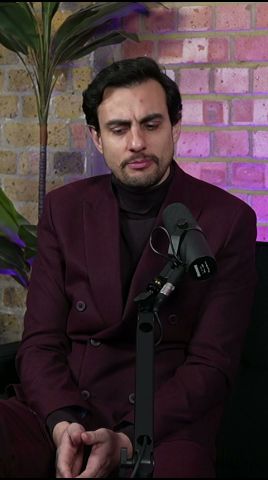
6 short cuts from the episode. Tap any to watch.


About the guest
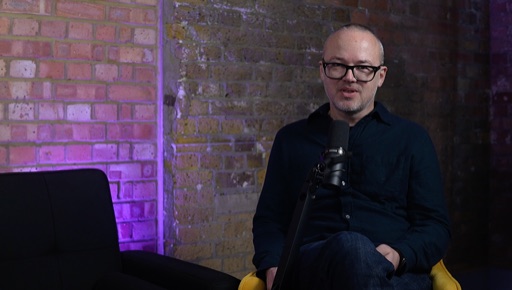
Ludwig Schreiber
CMO, Radley James & Iceberg
Ludwig Schreiber is the Chief Marketing Officer at Radley James and Iceberg, two specialist recruitment firms operating across the US, UK, EMEA, and APAC. Born in Brazil, he moved to China at 18, ran international business for a decade, then pivoted into marketing on the Camino de Santiago de Compostela. He set up a digital agency in LA with his sister, fell in love on a trip to Mexico, and now lives in London. Under his leadership, Radley James won the TIARA Award for Specialist Recruitment Company of the Year in 2025, with a high commendation at the Recruitment Marketing Awards the same evening. Ludwig speaks four languages, including Chinese and Spanish.
Read the conversation
Auto-generated from the YouTube captions. May contain minor transcription errors.
This is Off the Record, unfiltered stories from recruitment leaders. No pitches, no playbooks, just real stories from real people who've been in the trenches. I'm Alex Faiers and each episode I'm going to sit down with someone who's lived it. The wins, the failures, the decisions that kept them up at night, all the stuff that rarely makes it onto LinkedIn. So let's get into it. Today's guest has a truly global perspective on marketing. Ludwig Schreiber is the Chief Marketing Officer at Radley James and Iceberg, where he drives global brand strategy and growth across the US, the UK, EMEA and APAC regions. And what makes Ludwig's background really interesting is his international journey. From Brazil to LA to London, he's built marketing strategies from scratch. He's exceeded revenue targets by hundreds of thousands of dollars and helped Radley James win the TIARA Award for Specialist Recruitment Company of the Year. He speaks four languages, including Chinese and Spanish, and brings this global mindset to everything that he does. So, Ludwig, welcome to the show. So, for anyone who doesn't know Radley James, do you want to just give us the overview of where you're at as a business?
Sure. Radley James is a global recruitment agency specialised in finance and tech.
Yep.
Last year we won the TIARA Specialist Recruitment Award and that has definitely made a dent and put us on the map. We've been doing global recruitment for almost 20 years now and we have operations in the Middle East, in APAC, in the US, in the UK. We've been hitting very interesting numbers, growing steadily. And I would say in one sentence, Radley James is a growing specialist recruitment agency.
Nice. And there's Iceberg as well. So there's another brand.
Exactly. So I'm the CMO for both brands, Radley James and Iceberg. At Iceberg, we are also a specialist recruiter, but we recruit for cyber security and ediscovery. So where Radley James is a more established brand, Iceberg is still in the growing phase, but we also are making a dent, especially in the US. We go to events every year. This year we're going with three salespeople to Legal Week, which is in March.
Nice.
And yeah, it's just both phenomenal brands to work for.
They're both quite established brands. So Radley James, 20 plus years. Iceberg is what, eight, 10?
So Radley, I think it's around 19 years. And Iceberg, we are close to 10 now.
Okay. And both niche down, both specialists, would you say? And congrats on the success, by the way, for both, especially last year. It was incredible. Thank you. Would you say that leaning into those specialisms is part of the reason for that success?
Absolutely. We see in the market that many generalists are not doing so well, so part of our success is definitely because we are able to talk a very specialist conversation with the sectors we're in.
Yeah. And from a marketing perspective, it's got to be easier if you're talking to one or two people that are very narrowed down. You have one message, you have one language, you have clarity that you're able to bring rather than talking to everyone. So that must help as well.
It does. But don't get me wrong, even within the specialist sector, there are many branches.
Yeah.
So take Radley James, for example. Because we operate globally, the needs of the Asia team are different than the needs of the US team. So from a market perspective, you have to be able to communicate and develop content and develop strategies that cater to that specific geolocation and also to that specific geolocation's expectations.
Yeah.
So even though it's specialist, and talking about Iceberg the same thing, we are specialists in cybersecurity and ediscovery, but within those realms there's just so many branches.
Yeah, yeah, yeah. So I'm really interested in your role as CMO. You have this international background, from Brazil to LA to London, and this huge journey culminating in where you are today. So take us on that. What brought you to marketing and what brought you to recruitment specifically?
Very interesting question. I've always liked marketing. Even when I was a kid, I used to look at advertisement and the whole thing with emotions and what makes people tick and why do they behave a certain way and what are the triggers that make them take certain action? So I was always fascinated by that. But then growing up, when I turned 18, I moved to China and I did my university there and I started doing international business. And that was my life until 10 years ago. And what made the change was a trip with my family. There's a pilgrimage called Camino de Santiago de Compostela in Spain. And I left my job, I was burned out, I was stressed and I was walking with my family, and my younger sister was travelling with us with a backpack, with a computer, and she was doing digital marketing for a company in the US at the moment. She was living in LA and I was a bit lost. But I was fascinated with the fact that she was travelling the world making money, all that freedom. And I asked her to teach me that and she did. So I moved to LA. We set up a little digital marketing agency. We grew that.
With your sister?
With my younger sister, yeah. And I was just fascinated by the fact that you could have a computer and you could travel the world and you can make an impact and you can build stuff. Yeah. And never look back. And I met my wife, my now wife, on a trip I was doing to Mexico, fell in love and now I'm here in the UK. So yeah, in a nutshell, Brazil, China, back to Brazil, LA, and now UK.
Wow.
Yeah.
So how have you ended up in this CMO role? Because you're top of these two brands. They're big successful agencies in their own right. And you're leading strategy, global strategy. So how did you get into that CMO role? How did you get off the tools of doing the marketing and into the more strategic role?
It's a very interesting question. I think it was a sort of a natural progression and I don't think that all agencies our size have a marketing department. And this is interesting because I think the beginning of it all was the trust from the CEO. To be honest, I was hired to get more website traffic. When you eventually get into that role, you realise that what the company needs is not just website traffic, it's a new CRM, it's branding, it's the message, it's the why, it's the whole communication bundle. And then when you start presenting those ideas, and those ideas start driving results, you get more trust to the point where you alone are just not sufficient to drive the impact that you're willing to. So it was a natural progression. As when we won the TIARA Awards, I think they realised, okay, let's take marketing very, very seriously now because this can impact potential value of the company or deals we make or anything. So that made me transition from a hands-on marketer, building content, building strategy, building everything, to okay, now let's wear the CMO hat and think about strategy. How do we scale growth sustainably without losing momentum, without losing the brand, without losing who we are, the message. How can we consistently deliver not only content, but value to customers? And now, if you look back three years from now, we not only have a brand new beautiful website, but we have a Trustpilot page, we have relationships in those countries, we have boots on the ground. So it's a whole different story for both companies. So that was the transition and now we have a full-on marketing department. I've got a brilliant marketing coordinator that helps me so much and with that we want to scale even further. As the company grows, the marketing department will grow, and this was said by the CEOs already because they realise the impact that's given.
So take me back, because at some point there was a leap of faith, and this is something we hear all the time in recruitment when it comes to marketing. Because normally for the smaller-sized agencies, the owners have got a choice. They can just put more bums on seats and have more targets and make more calls, or they can invest in their brand and their messaging and marketing. And it's easy to go with the first option. So there is often this leap of faith. How did you make that happen at Radley James to be given this opportunity? Because as you pointed out, for an agency of Radley James's size, it is still unusual to have a CMO or marketing function at all.
Yeah, absolutely. I think to answer your question, I'll give you a few examples of what I've done and the impact it generated right off the bat. When I first started working for Radley James, I realised that branding was off. They have brilliant recruiters but, for example, LinkedIn banners, they all had a different LinkedIn banner. A few recruiters used to have an old logo of the company. From a marketing perspective, just unthinkable. But they were not paying attention to stuff like that. So one of the first things I did was to brand it. Every employee of Radley James was using, now to this day it's still that, I've updated with the TIARA Winner logo, but to this day we use all branded LinkedIn banners and I've added a QR code pointing to the website. I know this sounds very simple for marketing professionals, but you cannot believe the impact, the visual impact or the perceived impact that it generated on the CEO. When he saw that, he was like, wow. He applauded and to me was like, mate, this is basic. And he was like, wow, this is awesome. And then I realised, man, there's just so much work to be done. To the point where we changed the whole infrastructure of the company, the CRM. So I got involved in that. It's not my background, but they thought digital, digital marketing, digital whatever, CRM, you're going to be involved with that. To this day, we're building AI within the CRM. And I have a brilliant relationship with our CRM provider. And these are the little things that if you do your work right and you have the experience and the expertise to back it up, it will drive impact, it will generate results. It might not be seen immediately, but it will create some sort of impact. And someone somewhere will look at it and say, who did that? Oh, it was Ludwig. Okay, maybe he has some nice ideas. Let's hear him out.
Yeah.
And I can give you multiple examples of little actions like this, but it was just a buildup of many things that all coming together led up to us winning an incredible award.
And the conversations that you're having with the CEO from a marketing perspective, often they just want to hear about numbers. So where's the evidence? Where's the proof? Where ultimately is the ROI? And it is a challenge in marketing in recruitment. So how do you communicate that value that you're bringing to the business?
I think this is a very, very important question. And I think the value is communicated differently depending on the stage where we are. As I pointed out, one simple banner action led up to more trust. And I think the value is the CMO's responsibility to communicate. I was reading on LinkedIn the other day about a frustrated CMO that was not able to convince his CEOs about getting more budget or stuff like that. And I was thinking, it's your responsibility to convince him to give you more budget. If you think you need more budget, it's not the CEO's responsibility to give you more budget. It's your responsibility to earn his trust through work and then get the budget you deserve.
Based on results.
Based on results. And there are many ways to measure that. This is an old conversation about brand: how do we measure the impact of a brand? Even doing podcasts and personal branding. We need to have two separate conversations. One is the long-term brand and the other one is the short-term tactics. And I think they both need to go hand by hand, otherwise you're going to miss out on opportunities. I'll give you an example. We sponsor a driver, he races, and we, the marketing department, are responsible for putting the logos on his suit, putting the logos on his car. So that is brand. It's really hard to measure the ROI on that. How many clients are going to watch his race and then close a deal. We don't know. But we know that the logo has been shown on the TV, that is brand. Now on the website, how many clicks on the link, how many downloads on the report, how many calls booked. That is tactic. That is okay, we've done this, and we've got 10 SQLs this month because of what marketing did. But marketing doesn't do it alone. And this is the caveat. Marketing has to go hand in hand with sales because they have the expertise of the market. Marketing can build stuff, but it's way easier if they talk to sales on localised, especially if you're a global recruitment agency like us, on localised strategies that can drive results.
It's brilliant. So I'm interested in that bridge between sales and marketing because often they work in silos and in our experience, and I think you do this at Radley James, they're much more aligned. So if your sales team and the consultants understand what the marketing team are doing and how they can help, it helps everything. Especially when we're talking about proof and ROI because they're able to think, well, if I can find out where this person heard about us, that's going to help the marketing team with insight and intel and help them maybe get more budget. But it's often you find them sat in those completely different silos without knowing what's going on. So what's your relationship like with the sales guys?
Very, very good question. To answer that, I think it depends on the company culture. Radley James and Iceberg have cultures a bit different. So at Radley James, everybody's so busy, everybody's so trying to get the next big fish that they don't often report back to marketing because it's just go, go, go. At Iceberg, whenever they see, I'll give an example. A few months ago, the CEO called me saying that one of the clients decided to close a deal with Iceberg because he looked at our Trustpilot page and he was comparing multiple agencies. So they looked at the website. They both had a website. They looked at multiple things and we both had it. What the other agency didn't have was a Trustpilot review. So you never know what's going to move the needle. And that's why so important to never, never exclude brand, because you never know when it's going to hit you and where it's coming from. That's why long-term and short-term are so crucial and both have to go together. So what we did at Radley James now that I have bandwidth, before I was just a solo marketer, I didn't have time to go one by one. What do you need? What do you want? Now we have quarterly meetings with all of the teams. Me and my marketing coordinator sit down, we strategise, we build, we schedule, job done. Now I have the bandwidth to do that. But before, if you're a solo marketer, you just have to really prioritise the things that will move the needle. So I think prioritisation is key because you're only one and the amount of hours, it's limited. So you really need to focus on the things that will move the needle to get you to the next stage.
So for any agency owners out there that may be a little behind where Radley James are or Iceberg, but they're thinking of growth this year and increasing headcount, but starting to think about that marketing function, what would your advice be? Because typically it will be a junior or a mid-level marketer coming in and the expectations on that person are just huge. What advice would you give to that director or agency owner that's considering taking that path?
I think there are many paths and I think it will depend on the culture of the company. One potential path is outsourcing.
Yep.
Just don't forget about marketing. Marketing is an asset and if done right it will drive growth, it will drive brand awareness, it will drive results. One pathway is outsourcing. If you feel like you don't have the budget, but if it's a culture where you like to have people in house, you like to have interactions, then if you can afford it, have a mid-level marketer. It can be a generalist. But know that this person will need to outsource some of the skills because it's really hard to find one marketer good at everything. Just as it's really hard to find a doctor good at everything. We're all specialists in some areas, more generalists in other areas. So if you have no concept of what marketing can do for you as a business, hire someone or outsource it, but have marketing as an asset because, from experience, I don't know if we would have won the award if we didn't have marketing in the picture.
So you won this award. It was November, December last year, something like that. End of 2025.
Yes.
So congrats. You also had an honourable mention.
We did.
Tell us about that.
We did. It's a bit of a funny story because we had won the award. So we were buzzing. The story of the award itself is funny because I've been going to the TIARA Awards for the past three years.
Yeah.
First year was just me. I had no idea who were the people, what the award was all about. Second year, we pulled the application. Okay, let's build the application. But we're not that confident we're going to win. Was just second year. There were many gaps in our applications. But we did and we got shortlisted. We got to the finals and I thought, okay, if we got to the finals, let's start believing, guys, let's do it. We did it again and then we finally won. And when we won the award, we were still a bit high on the award. We were so happy. And then the next award was the recruitment marketing one. That one I really wanted to win because it's us, it's my department. And the presenter said, "Okay, we got a high commendation."
"High commendation for recruitment marketing awards: Radley James." Everybody clapped. I think I missed out on the high commendation. I stood up.
You thought you won? I thought I won it.
I stood up and I started walking to the stage. And I was the only one. And I was like, okay. Halfway through, the presenter is like, "Yeah, but it's not the winner yet. Just wait a second." And I had to walk back. But at the time, I really didn't care because we had already won the specialist recruitment, which was really what we wanted to win. And the fact that I got a high commendation for the recruitment marketing, I'll take it. It means that I'm doing something right. So yeah, it was just a brilliant, happy day.
That's incredible memories. Really cool. Thank you. So what's on the cards for you and your department and the two brands that you're running this year from a marketing perspective? What are you thinking about? What are you planning? What does your strategy look like?
The fact that now the marketing department is growing and I do have a marketing coordinator gives me so much more bandwidth. Before, I was limited to my own capabilities and now I sense from both CEOs that they just want more. We're very humble but very hungry to succeed. For Iceberg, we're going to three events in the US. For Radley James, we're looking at events in Singapore and Dubai, in the US as well. Not to mention the quality and the speed and the level of marketing, and also our vendors, our partners like yourself, and the tech that we use. Having that bandwidth and that extra layer of hands-on can really help. I'll give you an example. We're doing the podcast right now. Marcus, my marketing coordinator, is building content at scale. It is just phenomenal to see how much more we can achieve. So if you ask me what's in the books for Radley James and Iceberg? Growth, growth.
Just growth and more.
More, more, more is the word.
So in terms of doing more and what's happening in marketing and in the industry this year, we can't not talk about AI and the impact that that has. We feel it as an agency and we're keeping up, but the capabilities are changing. So you talk about doing more content. All of these tools are available to everyone. So how do you make sure that quality remains? The value is there, the messaging is correct, because there is a danger for misuse, for reputational damage. So what's your take on how you're going to contain things?
It's a very burning topic in marketing: how to use AI properly. Because as you mentioned, if those tools are available to everyone, how do you differentiate yourself? And I think it comes down to looking inwards. Meaning what is the mission, what is the purpose, what is the why? Because it might be that the answer is not AI. AI can do things faster, but without the message, without the core, without the pillars, without going back to basics and defining your content pillars, your ICPs, AI is just going to do things faster. But at the core, if the things that you are designing do not have the core principles, you're just going to build faster, but not necessarily the right thing.
Faster, not necessarily better.
Exactly, not necessarily better. So better does not equal faster. Because it's still relatively new, taking a step back and redefining your SOPs, standard operation procedures, can really help. And I do this with my team almost every day. Because if there's a new tool coming up in the market that can radically change the way you operate and the way you think without compromising your core pillars or your why, then you should take it, or you should at least test it, or you should know about it, because there's another marketer like you that has, and he will beat you.
Yeah.
As simple as that. So even though it's a burning topic, it's a conversation. I'm sceptical of saying that, oh, this marketer got it right. Because there's just so many ways to get it right. And what does getting it right really mean? Is it getting more clients? Is it that maybe what you're doing is good for the brand, but it's not driving results? Or the contrary. Maybe you have a vast amount of clients, but it's hurting the brand. So really going back to your principles, your core values, your why, your mission statement, and even redefining those if you have to. But don't compromise on culture and your values in exchange for speed and execution, because that's just a mistake.
Yeah, 100%. I think you're bang on. That's solid advice. All right, so have you got time for a quick fire round? All right, go. What's the best piece of advice you've ever received?
The best piece of advice I've ever received. I know I should have thought about this before, but I wanted to be as natural as possible. Let's think, we can come back to that if you want.
What do you know now that you wish you knew when you started on your marketing journey?
What do I know now that I wish I knew? I think as you get older, you tend to value different stuff like trust and relationships. I wouldn't be where I am today if it wasn't for someone trusting me that I could do what I'm doing. And I also wouldn't be here without relationships. Those two elements are so underrated when you're young because you don't know exactly how to approach it. But one piece of advice, going back to the other question, that I got from an old boss, he said to me, be in as many places as you can be, when you can be, because you never know when the opportunity will come. And I take that to this day. So if you have the opportunity to show up, do it. Because showing up may change dramatically the trajectory of your life. So I guess the piece of advice is: show up.
Yeah, yeah. What's one thing that most recruitment business owners get wrong when it comes to marketing?
If you had stopped the question, what's one thing that most recruitment owners get wrong, period? I would say marketing. But you used the word marketing. When it comes to marketing, in my opinion, not understanding the differences between long-term brand and short-term tactics. Because if you think you're going to sponsor a race and from that you're going to have 10 clients knocking on your door the same day, you're wrong.
Yeah.
But it could be that, a year down the line, some potential client sees a car running on a pub and then he decides to call. So understanding the value of the brand and what short tactics mean can really move the needle in terms of trusting your marketing department more.
What's one tool or resource that you've used that's helped you in your career?
One tool or resource that I've used? Is this software or anything? Anything. Yeah. If I open the pandora's box for software, this is going to become another podcast, so I don't know if I want to do that. But I think one tool, and I have to be honest, I haven't been practising this lately, but one tool that has definitely helped was meditation.
Okay.
Because in such an overwhelmed and noisy world, sometimes you just have to shut all the voices, close your eyes, and breathe and think, what is the best course of action that I would take if I wasn't influenced by everything else? You often realise that when you close your eyes and when you're in silence, and this is by no means easy to do because as soon as you close your eyes, something comes up, like you're late for a meeting or you forgot to do this, or there's some commitment that you have to show up for, and it's really hard to filter that noise. But when you do get it right, you can find so many gems that are already within you. But all you needed was a bit of silence. So I know this is a bit of a paradox. What does a marketer need? You think more and more brand awareness, more noise, more visuals. But no, sometimes it's the opposite, because I think it balances it out. The beauty of whatever you have to create can be hidden inside you.
Nice. I love that. Lastly, what's the bravest decision that you've ever made?
I think moving to London.
Yeah.
Yeah, I think that was something that I decided to pursue and it turned out to be right.
Yeah, amazing. So if people want to find out more about you and about Radley James and Iceberg, where can they go?
Well, we have both websites, radleyjames.com and thisisiceberg.com, or on my LinkedIn, linkedin.com/in/ludwig-schreiber. So just get in touch and we'll be able to help.
Cool. Well, congrats on your success to this point and the awards and everything that you're doing, both Radley James and Iceberg. It's amazing and inspiring. Appreciate you coming on the show. We'll put all of your details in the show notes so people can check you out and find out more. But appreciate you being on the show today.
Thank you so much. Thank you for having me, Alex. Pleasure.
That's it for this episode of Off the Record. If you found this useful, insightful, please share it with someone who needs to hear it. And if you've got a story worth telling and you're in recruitment, then please reach out and get in touch. I'm Alex Faiers. Thanks for hanging out with us.
◆ Our partners