Free Recruitment Marketing Roadmap
Take the free assessment and get a customised game plan to grow your agency.
Build my roadmapDo buyers hear your name when they ask ChatGPT?
Cited is a free AI visibility check for recruitment agency founders.
Get my Cited scoreLondon
Off The Record with Jen Kinnear
About this episode
2008 was brutal but obvious: pick up the phone a million times, ring clients until you got a job, follow the process. The last two years have been something else entirely. Jen Kinnear is reluctant to even call it a downturn. Her phrase is "a protracted agony": the business is visibly out there, and winning it has never been harder.
Jen is the Managing Director of Profiles Creative, one of the UK's leading creative recruitment specialists, and the founder of The Coco Group. She joined Profiles as a consultant in 2009, took over as MD in 2012, and has kept the business independent and profitable through the crash, COVID, and the strangest market in living memory.
This conversation covers what that actually took: the "lovingly but firmly" conversation with the founder that made succession work, the business development bet she refused to abandon as the market fell, why her people stay seven plus years in an industry famous for churn, and the AI conversation she thinks nobody in recruitment leadership is having.
Key takeaways
- The last two years hurt more than the 2008 crash. The work is visible now, and that changes the psychology of a downturn.
- The business development team Jen funded as the market fell apart is now behind Profiles Creative's most optimistic six months in years. Momentum is bought in the bad times.
- Succession from a founder works when the boundaries are explicit. Jen's version: "I can absolutely achieve what we want to achieve, but I can't do that if you're physically here as well."
- Seven plus year average tenure in recruitment comes from fair pay, open numbers, shared decisions and real paths of opportunity.
- Standards you tolerate become the standards you set: every time you accept a lower standard, you set a new benchmark.
- Only 10% of recruitment agencies use AI strategically (Bullhorn). The bigger gap: nobody is planning for the consultants left exposed when sourcing disappears.
- When your best person wants to build their own thing, you can compete with them or back them. The Coco Group is what backing them looks like.
Mentioned in this episode
Highlights
One short cut from the episode. Tap any to watch.

About the guest
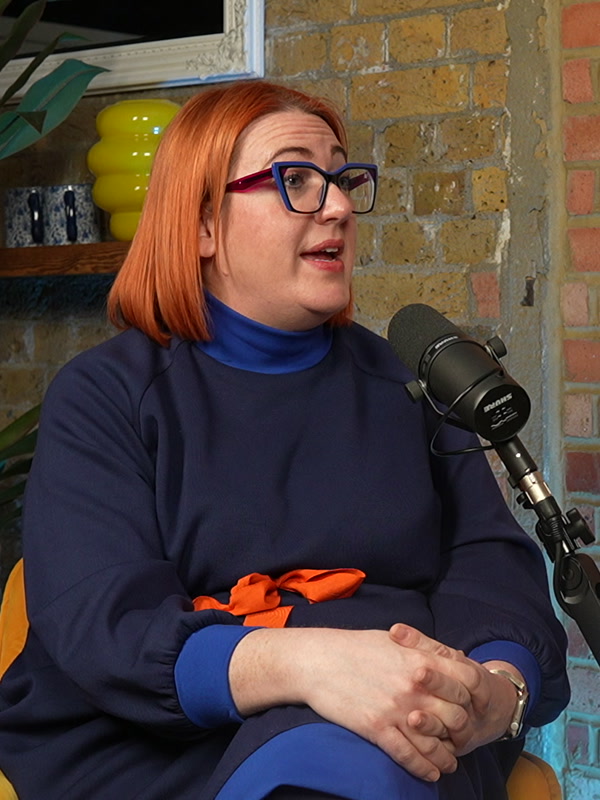
Jen Kinnear
Managing Director, Profiles Creative
Jen Kinnear is the Managing Director of Profiles Creative, one of the UK's leading creative recruitment specialists, serving consumer brands and agencies across permanent, freelance and executive search. She joined Profiles as a consultant in 2009, moved back into leadership within two years, and took over as Managing Director in 2012, keeping the business independently owned while many competitors were bought out or disappeared. She is also the co-founder of The Coco Group, a talent partner focused on client services, brand and events, born from backing a long-time colleague's ambition to run her own agency in partnership rather than in competition.
Read the conversation
Auto-generated from the YouTube captions. May contain minor transcription errors.
My next guest is someone who spent well over 15 years shaping the creative recruitment landscape in the UK and who we're proud to call a client at Addictivity. Jen Kinnear is the Managing Director of Profiles Creative, one of the UK's leading creative recruitment specialists. Since the business was founded in 2002 and Jen came on in 2009, it has become a multi division powerhouse in the UK creative space. In short, if it's powered by creativity, then Profiles Creative has it covered. But Jen didn't stop there. She's also the founder of the Coco Group, a talent partner. Just another string to her already. Impressive. What sets Jen apart is her philosophy. Profiles Creative isn't off the shelf recruitment, it's made to measure. So whether it's permanent freelance, executive search or building whole teams from the ground up, Jen and her team bring a culture of vibrancy, transparency and genuine partnership to everything they do. So, Jen, welcome to the show.
Hello. Thank you very much.
Thanks.
That was a very kind introduction.
Yeah, well, you're very welcome. Thanks for coming on. Appreciate your time.
Pleasure.
How's life? It's good, yeah.
We're talking on a lovely spring day.
Yeah, yeah, yeah, yeah.
I feel really optimistic and positive.
Good. So life's good in general or in work? So work's picking up.
Yeah. I mean, touching some wood because there's some right here. We've had a really optimistic six months actually. Really, really positive kind of last quarter. It's felt. Yeah, vibrant and healthy and long may that continue.
Yeah. So nice. Yeah. It's been a struggle, it's fair to say. Not just for you, but industry wide.
Yeah.
For 18, 24 months, something like that. In a difficult period.
Yeah.
So you, you've been involved in profile since 2009. You came in like during a recession.
Yep.
In the Last sort of 12, 24 months has been the toughest period. Or was it harder back then? When you came on board?
It was different. A few people have asked me that question. I think 2008, 2009 was like a really acute, horrendous market to recruit in.
Yeah.
But it was kind of obvious what you needed to do. You needed to pick up, phone a million times, ring clients until you got a job and then follow your process. Obviously then we had covert to navigate. But this, I kind of reluctant to even call it a downturn. It's been like a protracted agony, I think, for people because there are so many more sources of information. We're all over LinkedIn, social. Everyone can consume what's happening. We can see that there's business there, but it's really hard to get it. And that's kind of. That's been the real challenge of the last couple of years, I think. And everyone's kind of felt it's.
It's a different game.
Yeah. It's a different gain and it's been a really different pain, I think, that people have had to navigate. So I think everyone's had to pivot and, you know, try new things. And hopefully some of the things that we've tried is why we've had a much better six months.
Yeah. Just recently. So do you think it was even harder in creative recruitment? So the market that you're in especially.
So most of our clients are either kind of big consumer brands that are obviously really dependent on consumer confidence, people having cash in their pockets, a lot of retail. And then the other kind of side to our business is all of our agency clients. And obviously they're so directly impacted the minute, you know, something gets squeezed, it's kind of agencies.
Yeah.
So although there's been a lot of business still out there, there's been a lot more indecision, more people wanting to get involved before things get signed off. So it's been tough from both sides of the coin.
Yeah, it's been tough in agency land as well.
Really tough.
Speaking as a marketing agency.
Absolutely.
Yeah. I would say it's probably been for us, tougher than the sort of 2008, 2009. And I know a lot of other agency owners had a tough time in our space, but things definitely looking up, which is great for us as well. But I mean, in the industry, so, you know, we have a lot of clients I'm talking to a lot and the signs are great. So everyone seems to be thinking of hiring again. Thinking of building again. So pretty.
Yeah. I was at a dinner two weeks ago and actually everybody said the same, that they'd had a pretty optimistic six months. I think we're all just a bit scared. Scared to say it.
Yeah.
But we've just got to crack on.
So in the last six months, what do you think that you've been doing? Well has helped you build this momentum and versus what you were doing before.
So I actually think it's strategy and things that we implemented kind of 12, 18 months ago that started to really kind of pay rewards. So the year that we all came out of COVID and made loads of money and should have made even more and definitely should have saved some of it.
Yeah.
I invested in a business development team and Then obviously, things went south, but I committed to it. And actually, to be fair, that's one of the things that I loved When I joined the business back in 2009, a lot of people were kind of making redundancies and downsizing, but the founder of Profiles was investing. She's quite naturally, she was on the front foot, trying to upscale, be a bit more aggressive. And I think that's something that I've always reflected on as an employee. I felt like in good. In a good place, when your business owner is really kind of charging at it, that gives you kind of a sense of, okay, I'm gonna. I'm gonna match that.
Yeah.
So when the market really went to salt, let's be honest. But I'd invested all this money, attracted this brilliant person into the business. I thought, I'm not going to give up on that. So we've worked really hard. So our strategy has started to really pay dividends. We've grown.
That grew. The team grew.
The team really worked hard on that. Really kind of enmeshed it in the business and made it kind of a habitual way of working. And I think that is definitely one of the key things that's really helped us in the last six months. But on top of that, the team have been really responsive to it, and they've all really upped their game as well. And again, I think that's part of it. If you show that you're leading and investing and you're hungry and ambitious to go for it, you hopefully kind of instill that in your team as well.
So. So was it a change of model if you didn't have a BD team, a dedicated BD team before?
No, we didn't. So what I haven't done is kind of flip the 360 and totally split it out. In that sense, we've added it as an additional kind of function into the business, and it's been great. And we've used it to support already existing business areas, to really kind of underpin consultants. But we've also used it to launch into markets that are making money nice. And it's. Yeah, it's worked really well. So we continue to do that.
Very cool. So if we go back to you coming on board at Profiles 2009, you joined as a recruiter, as a consultant.
Yeah. So I'd been a leader in a couple of businesses prior to that, but it was a really tough market and I didn't want to have to worry about anybody else. So I joined as a recruiter, had
you been in creative before?
No, I'd been in media and digital so it wasn't a million miles away. But I'd never done creative and I'd never done freelance. So those two things were massive learning curves to me. But the minute I got into the business, I saw the value of freelance in a company and that really opened my eyes. Twin that with a really great brand and the fact it was a brand that was kind of really going for it still.
Yeah.
And that was, yeah, what piqued my interest. So fairly quickly I moved into. Back into a leadership job that was probably 2010, 2011 and then in 2012 I took over as Maryland.
Yeah. So how did that come about? How does one. How does someone take over?
Yeah, well, it was, it was interesting. Look, the Deborah who's the. Was one of the. Well, she was the founder of Profiles Creative in tandem with somebody else. But Deborah was the. The. Absolutely. The main force behind the business is amazing. We're still brilliant friends today. She's a really galvan, entrepreneurial, bombastic kind of character. Really dynamic. But she wasn't a structured. And she wouldn't mind if she was sat here now. She wouldn't mind me saying this. She wasn't particularly structured. I'd had that experience in past roles. So if you put the two things together, I'd never had the opportunity to be kind of really enjoy the entrepreneurial side of things. But she definitely liked the fact that I was all over the data. All over, right, okay, this is working really well. How do we replicate that? How do we grow? Grow that. So I think the confidence that I gave her in terms of, okay, if we're going to really grow and scale this and get real consistency, you need that kind of structured approach. The confidence I gave her with that allowed her to see that that was probably the right kind of leadership for the company. What was difficult is it's, you know, very difficult running a business for an owner that's already in there and kind of trying to do it at the same time. You have to be able to own space.
Yeah. Did she stay involved in the day to day?
Initially she wasn't involved in the day to day, but she was physically present. And it's hard. It's your baby. Imagine if someone tried to replace you.
Yeah.
And so initially there was some of that. But Deborah's quite an international character. She's always traveled a lot, lived abroad for periods of time every year. So there was a natural break. There was a particular time where she'd been away for Quite a long time, came back into the business and I lovingly but firmly said to her, this is going really well. I'm really enjoying this. I can absolutely achieve what we want to achieve, but I can't do that if you're physically here as well. It would just be too difficult because it's the decision making process. When you're leading, you have to be able to, you know, at pace, especially in recruitment, you can't be kind of second guessing yourself. So, yeah, we had that conversation.
Wow. So she completely sort of released the vines.
We basically, we put in for a very short time. We had a non exec director. I think that was to really give her some kind of confidence that somebody else was looking at things. But also, to be honest, the best thing that he did for me was tell me not to worry about Deborah. So that was. Yeah, that was really helpful. We initially had some agreements around, you know, if you're going to spend a million pounds. No, if you're going to spend, you know, a huge amount of money on something or whatever, she'd absolutely, you know, want me to chat to her about that. But as is normal, like, we would do kind of reporting and she'd understand where the business was at. And since then it's obviously evolved massively. So no, she's not involved at all now. We, I. But she's there if I need help. So, for example, you know, going through Covid, we all had to figure out how are we financing our business, what are we doing about furlough. So she's amazing in that sense. So I've always, I've kind of got her for things like that. But no, to this point, I run the business under my own steam and she has other interests and it works really well.
And what was it like with the team? So you've come in as a consultant, ended up running the place, being the boss.
Yeah.
Was that an issue with the culture? How did that land?
So interesting question. In the early doors, um, it's fair to say that I, the Profiles team, weren't a huge fan of me, mainly because I represented something that was so different from what they'd done and it was challenging. Like, I totally get it from their perspective. They hadn't had KPIs before or anything like that. I came in with someone else, actually, who came in as commercial director and I knew him, so that's how I actually ended up in the business. So I think we represented something that was just so alien to what this really cool creative business had been. But as we grew and I grew into the role. Yeah. Staff turnover happened, shall we call it? That happened. Yeah. But not. Not everybody. Like, certainly there's somebody in the business now, one of my co directors, who I adore, and she was there before me and I hold a lot of gratitude to her, actually, because she really was a great anchor for me, particularly in the early days, as you navigating that, because. Yeah, it's hard. It was hard, yeah.
Yeah.
But amazing.
Yeah. It's incredible to come in and muscle your way in and take over like that, politely. But, you know, fair play to you. You have done that and made an incredible impact on the business. So it's one of the leading creative recruitment companies in the country.
Yeah, we're very proud of it. And I think it's a different skill, isn't it? Someone who can start a business from scratch and build a brand from scratch, do it from their bedroom, which is really what most people have to do when you very first start. That was absolutely credit to Deborah. I could. I couldn't have done that. I don't think she was amazing. But it's a different skill to then pick up that baton.
Yeah.
And think about things like developing leadership teams. Deb was actually hugely strategic. But it's the people bit. It's the. And I think, you know, that's one of the things that I think business owners can sometimes forget, like the. An entrepreneur and a founder is not always necessarily the best strategist and able to be objective and think about the people part in the business. So the combination worked really well and
the people part of the business. So running a creative recruitment company with creative candidates, creative clients and a creative team is challenging in itself. You know, I know from running a creative team how challenging that can be with people with talent. It's always the number one issue. You know, when you scale past a certain point in terms of headcount, it starts to become really, really challenging. And I know you work with a lot of agencies like us. Yes. My wife also works in a big, successful creative agency. Same issues. People, people, people. And I know that this is one of your sort of areas of genius is coming in and being able to help your customers with this strategy with these problems, hiring the right people, finding the right fit. So, yeah, incredible stuff that you guys do. What do you put your success down to?
The team, to be honest. Yeah, I think we worked really hard. We had. Oh, it's a long time ago now, maybe even 10 years ago. I had a little episode where we had a flurry of people leaving and that really impacts you. It doesn't matter how great your brand is and all of that. Like if you lose your people, they're the relationships that the clients really care about, let's be honest. And it's the knowledge that they have, particularly in creative. It's not a skill set. Recruitment. Right. We have to understand it.
Yeah.
My team understand it way better than I do because I'm not on the tools anymore. So when that happened I really had to think about what can we do to retain people? What, what do we need to create, what vision do they need to buy into? You know, when do people fall off a cliff almost.
Yeah.
Excuse me. So I think our staff retention, we've just, we've been hiring over the last kind of 612 months, but prior to that our average kind of tenure was seven plus years, which is pretty unheard of in recruitment. It truly is.
So how do you do that?
How do you make them love me?
Form that culture so. And make them stick around rather than, you know, if they're your top biller or they're hugely successful. There's always that pull.
There is. And it happens. Look, of course we've lost people. It's rare that we lose people to competitors, but of course it happens. One we remedy, remunerate people fairly and well. I try and say to the business and I think it's a unique position to be in, like I'm employed, actually I am obviously I'm a shareholder in profiles now. Things have grown in that way. So it's my business and I feel passionately about it. So it's my business. But I also still remember and feel like an employee. And I think if you remember that and kind of think about how you want to be treated in that scenario, it can really help. So things like I'm pretty transparent with them about the numbers. I'll be open about things. Hopefully there's not too much, if ever that's behind the curtain. I try and encourage people to feel like it's their business too and that they're involved in decisions and I don't find that easy. And my team, if they watch this, will laugh and go, but you're a control freak. I am. But I share the decision making process and much as I possibly can, I've worked hard to create paths of opportunity for people and they in turn work hard to create paths for other people. So I think those things all kind of build a picture that if you're going to do recruitment, it's hard so you want to do it somewhere that you enjoy the most you can possibly enjoy it. And hopefully they pick, they pick us up.
So you come into this business taken over, had great success. If you had any advice to someone who was starting up on this journey, maybe not the exact journey that you've had, but starting up in recruitment now in 2026, what would your best advice be?
I think, well, there's two things. Starting from scratch, I think I would really kind of find a niche and I would double down on that niche again. One of the things I did in the relatively early days of Prof. Was stopped working in certain areas. So we did used to do a lot of kind of fashion like wholesale buying, merchandising. It just didn't make any money and we weren't specialists in it, so I kind of cut that. So double down on your niche for sure would be. Would be a key thing. I think if you were going to try and do what I've done, which is you're in an existing business and you're thinking, how can I maybe take over some control and think about succession planning someone out earlier on in that. I wish I'd thought about the challenge between scaling so growth versus being very profit led. Because obviously when you've got an owner in the business, particularly if they're not operational day to day, they're going to want to take money. Like of course everyone wants to make cash out of their business, but to do that and also try and scale is really challenging. So being really clear about your strategy. So if you're planning on wanting to grow a lifestyle business where there's just a couple of you and you make great money, that's one thing. But if you really want to grow and scale something that's got some significant size to it, really having a proper plan around reinvesting the cash, that kind of plan is what I'd focus on. And full transparency and transparency and trust. Yeah, for sure. So Deborah and I have always been pretty aligned with that, so it's not been a problem for us. But definitely As a newer MD when I was in my early 30s, I thought I could achieve both. Well, I want to make loads of profit, of course I do, but I also really want to grow and scale the team in a really aggressive way. And it took me quite a long time to realize that actually not many businesses do both at the same time. So I think starting out with a plan and figuring out what you're agreeing to is, would be probably what I would advise with profiles.
Are you kind of happy with where you are now, have you got aggressive growth, growth plans from now, I can't get my words out.
So we've always been. I've, you know, without giving too many details away, but we've always been really robust and I've always been really focused on the bottom line and making sure that we're really profitable. And I think that's been. That rigor has been something that's been really crucial to the success of the business. It's what's allowed us to. Many of our competitors haven't survived the last few years or they've been bought out by bigger organizations. We're still independently owned and part of that is that we had the opportunity. We've accumulated a war chest. Right. We've been really prudent about things and been smart about when we start to invest. It's always floored me when you talk to much bigger businesses that their kind of EBITDA comparisons won't be as good as ours often. So, yes, I'm really happy with that. In terms of scale, we're a little bit smaller than I'd like us to be. We're in a growth period at the moment, always will be. I've never, ever stopped interviewing good people, ever. Even when things are really difficult. I think you can't. In recruitment. You should always be meeting the best people in the market. So we've got a strategy over the next couple of years for growth, but it will always be to answer the other question you asked. Actually, one of the other things I did about retaining people was always making sure that good people can make good money. So rather than making everybody like tiny slices of a pie, I made sure that everybody always had enough kind of space. So we will grow, but only in line with the scale of the opportunity that's presented to us.
Yeah. And now you have your amazing BD team that's working.
Yeah, they're great.
It's a platform for the whole business to enjoy. So. Yeah. Amazing. Are you ready for our quick fire round?
Yeah, sure.
Because I haven't memorized them yet. How are we doing for time? Perfect. So what's the best piece of advice you've ever received?
When I politely asked Deborah to give me some space, the non exec director at the time said, better ask for forgiveness than permission. And that actually was really. That's one of my powerful. But I heard an amazing one recently which has really stuck with me. So can I give you two?
Of course.
A chap said, every time you accept a lower standard, you're Setting a new benchmark. And I think that's so true. So I really keep thinking about that with the team that they're both love it.
What do you know now that you wish you knew when you started at profiles?
Probably the thing that we just talked about. Are you growing? You growing or are you making more profit and kind of making sure that your strategy is really attuned with that?
What's one thing that most recruitment business owners get wrong?
Politely forget that employees have got a choice. Like it's not, you know, even however hard the market is. A really good recruiter, a really good freelance recruiter or even recruiter. There's always options for them. Yeah. So. And people don't love the business the way that you love it. So you've got to create reasons for them to want to be there.
Yeah, agreed. What tool or resource has made the biggest difference to your business?
The thing that's changed my job the most significantly, which has then allowed me to have the bandwidth to do things more strategically, was. I shouldn't say this because he'll get a very big head, was investing in a really good finance lead. So my finance director and then his team with that. Prior to that, I was doing all of that myself. So definitely kind of having a head around the numbers was great, but you can't do everything. So investing in a really good back office, we've been able to grow and develop that. So actually now we have a payroll solution. For example, we have our own umbrella company for any contract recruiters. They'll know that all of this is relevant. I wouldn't have been able to do any of that without them. Without them.
I can't believe we've had this whole conversation without mentioning AI.
I know, I know, but I feel like it's coming well.
Yeah, yeah, I. I mean, how has that impacted. I know we're going off on a tangent here, but has that impacted your clients? Like, agencies are panicky. It's changing the game.
Yeah. A lot of people are going well, it hasn't really. It can't replace me for sure. It has impacted things like copywriting, the number of bookings. Obviously, we're such a heavy freelance business that you see that direct impact, but a lot of clients still don't really know how to fully integrate it into their business. So we are working hard on that. So we have. We work with consultants on it. We're interviewing great candidates on it. We're learning all the lingo. So we're really committing to that. We're also committing to Bringing it further into our business, which thinks really cool. So for me, all the advantage that's going to give us is creating more opportunities for consultants to speak to people and do the part that the robots can't do.
Yeah. Make their life a little bit easier. Yeah. There was the Bullhorn report that came out last week. I'm not sure when this podcast is going to be released, but their report came out last week and it was 10% of recruitment agencies are using AI actually strategically in the business versus just talking to ChatGPT.
Yeah. I would. We're fairly close to it. I'm in the middle of a massive tech kind of upgrade project.
Yeah.
And I fully, like, I am fully bought into it and embrace it and believe it will be have a really big impact in our business.
Nice.
Yeah. There is one thing though. I don't think people are talking about as much. Am I allowed to. Am I right to ad lib everyone? At the dinner I was at the other week actually, recruitment CEOs all talking about how AI is going to improve their EBITDA and reduce their costs here, but no one's talking about how are they going to upskill the consultants or how are they going to manage the consultants that they've got in their business once so much of their time is taken away from doing things that they're quite comfortable doing.
Yeah.
So for example, if you watch, particularly a permanent recruiter, they spend a lot of time searching on things like LinkedIn and certain boards. All of that is going to be stripped away. So you're going to be left with a workforce that suddenly feels a little bit exciting, exposed, and they will need to do the part of the job that not every recruiter in this market is that comfortable with. So I think that's something that we've really got to watch.
So picking up the phone, working on
relationships more, face to face client meetings and delivering more. Yeah.
Because we've just taken off 40 or 50 of your role.
Absolutely. Yeah. Because the answer can't be that we just make everyone's jobs that little bit easier, but they still perform at the same level. That was a big problem for me when we put a big LinkedIn spending. Your overall billings don't particularly go up, but it becomes a necessary tool that people expect to have and you've got a huge overhead with it. So that's what I think we need to be really careful of with tech investment.
It's an opportunity though, for those that embrace it to be like, well, I'm going to like, I'm going to do double revenue. I'm going to clean up now.
I'm all about it. I feel really positive about it, but I can see it. Not with the team that I've got currently, but certainly in a past team, I'd have had people thinking, okay, but I'm quite comfortable with my couple of hours a day sourcing, for example, or writing job specs or, you know, ads. And actually, if you expect me to do more client contact in that couple of hours a day, that's going to be a little bit uncomfortable for some.
Yeah, yeah.
But a huge opportunity.
Yeah. Those that embrace it, they will rise to the top.
Absolutely.
So here's one for you. What's the bravest decision you've ever made?
Something we haven't talked about is something that I feel really strongly about, which is that intrapreneur. It's a hard word to say. Intrapreneurship. So creating more Runway for people. Right. And one of the things that I did was that's how our Coco business was born. And myself and my co founder, Jen, who's my business partner, she'd worked with with me for many years. I knew her actually from my first recruitment job. And she'd always had the aspiration to have her own recruitment agency again. She'd had one before. Um, and so rather than her going just to do that in competition, I created an opportunity for her to do that in partnership with us. Um, and that was amazing. But lots of people didn't like it. Um, I think embracing that entrepreneurial side of you and going, yeah, it's okay, we can talk about it. We can actually have a dialogue about the fact that you might not want to do this in this business is a bit scary. And although I was really bought into it and Deborah was really bought into it and Jen certainly was, and it's really flourished and is a really successful business in its. In itself. Now, internally, there were people that weren't comfortable with things that were kind of outside of that single track way of working. And it did cause a bit of pushback.
Yeah.
And that was challenging at the time.
Yeah, I can imagine.
I don't know if that's brave or not, but it was certainly kind of stepping into something different.
Yeah. I think goes back to that culture piece that we were talking about earlier, though, and the transparency and it's okay. We can have a difficult conversation and maybe it. It's not as black and white as you leaving.
Yeah. You know, I think it brings up emotions in people where they think, well, why why am I absolutely. And that was the uncomfortable bit. Be my guest. Have a go. Not everyone's suited to it. I won't say yes every time. It's not appropriate for some people. But it was definitely really exciting for me, particularly because I wasn't there at the start of profiles. It was really exciting for me to start. Start something off.
Yeah.
I felt passionately that we should support Jen and she's brilliant and has absolutely repaid that investment a million times over. And you never know what I might do in the future. It also created. We actually created a shared services company. So my finance lead, who's brilliant, also has that opportunity and he's got kind of equity and ownership in that and so. And we've tried it before and it didn't work and, you know, we just rejig things. So it's never a cliff edge, but it's just an opportunity for the right person.
Yeah. Cool. So what does the next 12 months look like?
Tech, AI and growth around that piece. So for sure, building on that business development function that I have, creating much more kind of inbound stuff from the marketing perspective, which will be very pleased to hear. We have to. Everyone has to commit to that. More brand building and really thinking about the types of people we have in the business and making sure that they're ready for that shift in the way of working.
Yeah.
And the new people that we're bringing in, making sure that they're. They are already working like that. So there's no. No, it's not shocked for them. Yeah.
Amazing. So cool. So if people want to find out more about you, about profiles, where should they go?
Find me on LinkedIn. If you want to chat to me, it's probably the best thing to do. Jen Kinnear. I think it's my. Yeah, it's not my Sunday name, my full name. It's jenkinna and yeah. Profilescreative.com and thecoco group.com amazing.
Thanks so much.
Pleasure.
Really appreciate you coming in. So that's it for today's show. Thanks again to Jen for coming and hanging out with us. If you've enjoyed the show, if you know of anyone that would enjoy watching this or learn something, please do share, subscribe. Like all of that good stuff and thanks for hanging out with us. I've been Alex Fez and we'll catch you next time.
◆ Our partners