Free Recruitment Marketing Roadmap
Take the free assessment and get a customised game plan to grow your agency.
Build my roadmapDo buyers hear your name when they ask ChatGPT?
Cited is a free AI visibility check for recruitment agency founders.
Get my Cited scoreLondon
Off The Record with Jason Kilbride
About this episode
Jason Kilbride was the second choice for a consultant job at a five person recruitment business in Cambridgeshire. Thirteen years later he owns it. This episode is the story of how that happened: the sports science degree and the placement with Team Sky, the one salary question that sent him into recruitment, the first morning at Henderson Brown when a laptop in a box nearly made him walk out, and the conversation with the founder that turned a minority shareholding into a management buyout.
It is also a working owner's account of what came after. The first full year after the MBO was a record year. The lessons cost money: hiring juniors into cold markets, believing growth meant headcount, taking people decisions too late. Jason talks through how Henderson Brown scales now, why business development is measured on output rather than method, and where AI leaves the human side of mid to executive level recruitment.
Key takeaways
- The Team Sky placement, and the one salary question that pushed him into recruitment
- A £30k first fee at 23: a Kazakh contractor, a Canadian limited company and a room full of Maersk lawyers
- Day one at Henderson Brown: a laptop in a box, no phone, and ten minutes of "what have I done?"
- The buyout conversation: "I could take the key people and set up on my own. I don't want to do that."
- Why the billing manager is the hardest job in recruitment
- Vanity vs sanity: the cold-market hires that failed, and why he now scales through process, not headcount
- Cold callers and campaign builders getting the same results: output is the measure, never input
- AI in recruitment: why the human touch gets more valuable at mid to executive level, and the CV tool that saved 32.5 hours
- Quick fire: relationships, battle scars, "we all row separate boats", and the MBO as the bravest decision
Mentioned in this episode
Highlights
8 short cuts from the episode. Tap any to watch.


About the guest
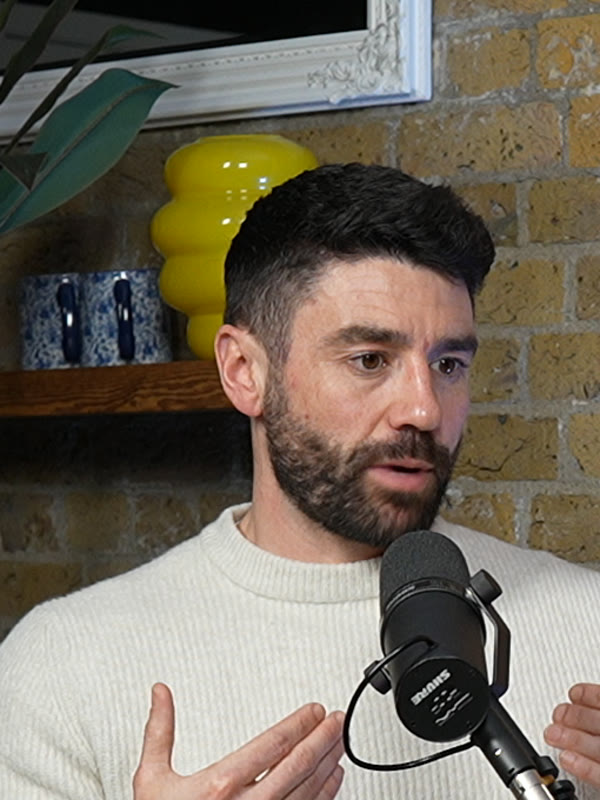
Jason Kilbride
Managing Director, Henderson Brown Recruitment
Jason Kilbride is the Managing Director of Henderson Brown Recruitment, a Peterborough based specialist across fresh produce, FMCG, food manufacturing, supply chain, procurement, sales and marketing, engineering and professional services. He joined the business as a consultant in 2013 after a year at Hydrogen in London, ran teams as recruitment manager and recruitment director, bought in through an EMI scheme and completed a management buyout from founder Martin Brown at the end of 2023. Before recruitment he studied sports science at Teesside and spent five months with Team Sky and British Cycling in the run up to London 2012.
Read the conversation
Auto-generated from the YouTube captions. May contain minor transcription errors.
My next guest is Jason Kilbride, the managing director of Henderson Brown Recruitment, a business. He has grown from being a specialist recruiter right the way through to the top of having held every senior role along the way before taking the business helm in 2023. Jason is a firm believer that recruitment is never just about filling a vacancy. It's a risk managed, strategically led business decision. And he works closely with clients to build hiring strategies driven by ambition, not urgency. Away from the desk, Jason brings a fascinating background. He holds a Master's in Sports Science and even completed a placement himself with Team Sky in British Cycling. It's perhaps no surprise that he applies that same discipline, preparation and performance mindset to everything he does in business. Jason, it's great to have you on the show. Welcome.
No, thank you. Really pleased to be here.
Yeah, I really appreciate you taking the time to come in and chat to us. So we've not met before. It's really interesting to sort of hear some of your story. It's a fascinating background. So before we get into that, just paint me a picture. I know I said a little bit there about Henderson Brown, but where are you at as a business today?
Yeah, so the business has evolved quite significantly from the early days of the business, specializing in fresh produce and horticulture and expanding into food manufacturing, FMCG. We're now sort of focusing on other markets outside of FMCG. We just launched into energies and utilities, further international reach as well. The business has evolved. I think really what we are key within is supply chain procurement, sales and marketing, manufacturing and engineering and also professional services within those spaces. So yeah, it's been quite a lot of evolution over the years from where you are. Fresh produce is still a core sector that we operate in but we've evolved further from there.
Team size.
Yeah, so we've actually just this year we're expanding the team so two new acceptances to start in a few weeks time. So we'll be plus four on headcount. So we'll be up to 18 in the business including sort of the support team as well. And that's not including the sort of board and Andy who you also know, who's joined us as a non exec reason.
Yeah. Nice exciting times.
Yeah, very much so.
Been challenging for the last year or two.
Yeah, well actually interestingly 2024 we had a record Year first year after MBO as well which is great.
Yeah.
And then last year was an okay year I'd probably say first half wasn't great. Very much changes around sort of NI changes really stagnated the market I think a little bit for a lot of people but especially in the FMCG space where high headcount numbers, big, big costs in terms of straight off the bottom line and we're talking millions. So a little bit of stagnation that came back towards the back end of the year which meant we had an okay year. But back end of 2025 and start this year has been really good. So in a good position to continue through the rest of this year.
Cool. So I want to dig into more of the story from Henderson Brown but sports science was where you started your. Your career and you studied that university. You ended up working with the, the sky team.
Yeah, yeah.
How long were you involved in that?
Well so it was six months. So I did, I did an undergrad in sports and exercise coaching science as all budding footballer. Quite played at a decent level in terms of football thought I love, love sport. Let's go to university and do sport. Yeah probably now hindsight I'd do something different that would have maybe benefit my career but actually loved it. University made me who I am. Stayed on because I didn't want to leave as most people don't.
Where did you go?
So Teesside in Middlesbrough. Yeah it was definitely learned what it's like to be with people in the North Northeast so great place. Stayed on did a master's in sports therapy and just for a connection of mine knew somebody within Team Sky and British cycling it was needed to do a placement three months run up to the Olympics 2012 it was wow. So I work sort of to the Velodrome in Manchester in the run up to the Olympics and they asked me to just stay on for, for a few months as well in the run up to the Olympics and sort of did six months almost no slightly less than that five months up there working with Chris Hoy, Victoria Pendleton sort of doing sports therapy and strength and conditioning support during that period in the run up to amazing. So yeah it was interesting and then realized that actually it wasn't what I wanted to do. I had sort of wanted to do something in business and and that's how the recruitment career started.
So what, what sparked that you you're in there with these amazing athletes.
What, what one conversation with. With the, the head of sports therapy. He's in the 1% top, top level of, of sport in the UK. He'd been at Sale Sharks as head of sports therapy and we were having a conversation, I politely asked him, I said look, you're in the top 1%. I was young, 22 year old, like what's the earning potential? What can I earn? Yeah, it might have been 23. And he told me his salary and I was like, cool, I'd like to earn more money than that in my life. You're at the top 1%. And, and that was that stimulus and, and I thought, well actually like there must be, he was 60, 70 hour weeks and, and, and I thought to myself actually there's, there's more. And I had that mentality. I wanted to earn money and I wanted to do that. And hence why then when you look at jobs in London, recruitment comes up at the top of earning potential quickly and that's how I stepped into it really.
Okay, so where did you go first?
So I actually joined a graduate recruitment business as a, as a, well, how would I describe it? They, they found opportunities. So I had three offers on the table. I joined Hydrogen at the time. So the one reason I picked them was they'd won for the last two years before I joined like Recruitment Graduate Trainer of the Year and the Recruitment Awards. And I was like, actually if you're going to get the bedrock, let's get, let's get the study behind this, let's learn it. And I had some fantastic training while I was on there. Got chucked into the deep end really because there were some changes in the, the SAP team that I joined recruiting the Benelux, no language skills. It was a baptism of fire of business development that was for sure.
And like niche technology as well.
Yeah, yeah, knew nothing about it.
Yeah.
Contract. My first placement was a, a Kazak national on a contract for Maersk Oil but she had a limited company in, in, in Canada, complex legal teams. 23 year old sat in an office. It was, I was like, what am I even doing here? And it was like a 30 grand fee. And, and yeah, it was actually probably quite good to do something like that. Sat there feeling a bit imposter syndrome.
Yeah.
And yeah, joined Hydrogen. Great training, great business, it really was. And, and I wasn't there for as long as I'd wanted to be only because lots of moves in life were about sort of relationships and I'd move back home with, with a partner at the time, back to the Cambridgeshire area. And that's how I came across Henderson Brown After 12, 13 months with, with Hydrogen in London and move back to
where I grew up. How long was it like when you first did that grant? We first started that graduate placement and you thought recruitments for me. I've made the right call here, that first fee.
No, I think it was a little bit before that. I think it was. You could see around the office actually, you, you can earn and sort of grow as a person for what you put into it. And that's always been the same with sport, isn't it? You put, you put hard yards in the stuff that people don't see and you get the returns and people see those returns when you walk onto a football pitch and they see somebody score a brilliant goal. But what they don't see is the hard stuff you do in the shadows. And I think recruitment's a little bit like that. The hard work that put in behind the scenes sometimes people don't see. But the harder you work in those bits, the more of the results you get. So I saw that quite quickly and I got that hunger for it and actually being able to. 23 year old with Maersk lawyers, Hydrogen lawyers, sorting this down, I was like cob, lots of people probably want to exchange. You can really push yourself quickly into those conversations. So that was probably what got me maybe before the first deal.
Okay, nice. So you were there for like 12, 13 months?
Yes, yeah, yeah.
Moved, yep. Found out about Henderson Brown.
Yep. I happened to see an advert back in my local area, applied for it. Funnily enough, the owner of the business at the time, it was dual owned by Martin Brown and Stephen Henderson. And I actually called it, still a running joke now, Martin, Mark on my first email. Hi Mark, I want to apply for this position. So God knows why you interviewed me. So attention to detail and all that. So yeah, interviewed with them and they took me on and somebody else at the same time. Apparently I was second choice and they decided to take two. Take the risk.
Yeah.
And the other one lasted three months and here we are 13 years later. So.
But they take you on as like consultant.
Yeah, senior. So I joined, I think as a senior consultant, maybe a recruitment consultant.
Joined.
12 months experience and the idea was to do some it within their sort of client base. But quite quickly a small business just happened to recruit across all of their sort of different roles.
Incredible. So what happened from there? Because this is quite some journey. You've, you've come in, you've come in at consultant level and grown into the role and moved up the ladder fairly quickly. How long was it until you started to think, there's an opportunity here.
Well, interestingly, I think when I first joined it was a small business. So I'd been in a business with seven offices across the globe. 500, 600 employees.
Yeah.
Big, big scale to five people in an office, one of which was just an admin resourcer and, and two owners. And it was, it was a bit of a shock. I remember day one walking in and being sitting there, no laptop, no phone. Given one of the, the owners of the business walked in with a laptop in a box, put it on desk. Ah, good to see you. Got yourself a coffee.
Yeah.
Set your laptop going off. There you go. Just like I sat there for 10 minutes going, what have I done? It was one of those moments where actually I really considered just being like, this isn't for me, and walk out. And I swear from that day, no one would come into that business with that same experience that I had. And actually what I learned from Stephen and Martin, Stephen actually Martin bought Stephen out after six months of me being there, which was quite a shock to small business to two owners.
Yeah.
One, Martin wanted to grow it and scale it and Stephen wanted a lifestyle business. So decided to separate and, and, and the opportunity. And what I learned. Martin was an ex MD within the fresh produce industry. He'd worked in, in the space before. So I saw a different dynamic to how the business world works in recruitment and how actually recruitment is so integrated as a, as a partner in proper businesses. And he always said, if you want to recruit for a business, you need to know that business. You need to understand them and understand what they do. So it got ingrained into me early and then I started to do lots of different roles. Interesting. Such an interesting sector that you don't, you don't understand how a tomato or an avocado gets on, on your plate and the complexity in it. That just got my interest in the industry and then it scaled quickly from there is in terms of my role and position as Martin and Stephen's button. Then the team grew and then I started managing and enjoyed the management side of things and the leadership and then just continued to develop from there.
Do you think it was the one partner leaving making space potentially for another? What happened? Did, did you kind of step into that partnership role or was. Did the story play out differently?
Yeah, the story played out differently really. I think as we started to grow and grow the team of bringing people in, there was myself and one other who was sort of given two areas of the market as recruitment managers at that point. I think I maybe had a couple of resources working for me and then actually we were both given errors and said, you grow. And our team performed really, really well. And, and then I ended up then going above and managing that other recruitment manager. So I think it was. There wasn't that opportunity probably in those early days. It was maybe a couple of years later when I started to, to step into that and maybe Martin saw in me that I wanted to do more leadership and I enjoyed coaching and developing people and building team structures out. So that's where it sort of started to happen.
Okay, and what was that journey like? Going from being a biller, like being on the tools, coming more into the leadership role, taking people on managing them. How did you, how did you find that?
It's tough. The billing manager job is the hardest job in recruitment country. Mile you're doing two jobs effectively and you're having to manage your time. And I have the utmost sympathy for all of my billing managers in the business and the heads of practice all still build extremely well and lead teams. It's tough. Yeah, it's hard. And you have, you learn so much about yourself. You have to learn how to put a mask on when things are, when things are down and your desk's tough. And so I think that that teaches you a lot in a bidding manager's job. And I think there was a lot I had to learn in those, those early days to do it and, and I now don't recruit much at all. Just some hires and some projects. Very little now. And I still do like dipping my toe in occasionally, as most founders probably still do. But I've had to transition the business and Martin and I did that a number of years ago to be. Actually, we can't scale this where we're 70% of the revenue and big numbers between the two of us actually we have to get. Elevate the team and really start to coach and develop individuals in our business to then create a foundation to scale the business.
Okay, so how did the buyout come about?
So actually when we were both recruitment managers, myself and the other individual, we were both offered EMI scheme into the business, which I think are fantastic tools. I think they're brilliant to really make people feel like they're part of that journey and reward them for that. So I ended up wasn't quite how an EMI scheme should, should, should turn out. Usually obviously in an event of a sale I actually said to my look, I want to buy into the business. So we basically, I bought my shares effectively, so I bought I think it was 7% at the time, something like that. And then there was a couple of other areas where I could scale up and ramp it up to about 9%.
So you had the business valued, you went through that whole process?
Yeah, yeah. So we did that probably now, six years ago and did that piece. The other individual decided not to. They had, were offered slightly less of a percentage than myself, decided not to do it and subsequently left a little period after that. So basically major shareholder and myself as a minority and then it was like right, go. And then sort of four years ago we've got a great relationship and I think testament to himself and also me is we've, we've kept it amicable as not many MBOs end up where your friend. Of course we've had difficult moments through that period but actually I said to, I said to him probably about four years ago now, he was in his, his late 50s and I said everyone's reporting into me. I've been MDM running this business. I could go away and set up on my own, just give you my shares back and, and, and then I would. The key people are going to come with me. I don't want to do that. You've given me an opportunity. So let's come to a situation where we can come up with a deal that works for both of us that you're paid what I think you've given me the value for it and let's have a grown up conversation about what. And he was like yeah, I totally understand.
Did he see that coming?
I think it was probably slightly. He knew at some point I would probably buy the business but it was, it was probably a bit earlier than maybe he'd wanted it to be. But I said now's the time for me. I feel it's right to do so and I don't want to. I could probably and, and transparently I said Tim, the business is probably the key people are going to go and then you've, you're left with not a lot. I want to give you the value for it. And arguably some people said to me like just set up on your own, take the key people, it's going to cost you. But I, I felt I owed something to Martin and the relationship that we had together. So we went through that process and he's still a minority shareholder in the business now. Not actively involved day to day, day he's not director, he's just, just a shareholder. Gets involved helping me with some top line project stuff, etc. But that's how it came about, I sort of probably forced his, his hands to retire a little earlier than he would have wanted. But I felt the time was right for me and taking the business forward as well and for the business.
Yeah, incredible. So it must have been somewhat of a risk for you personally, like you've, you've had to finance that yourself presuming. So that must have been a bit of pressure. What was that conversation like at home?
Absolutely supportive from my now wife partner at the time. She was just like yeah, if you want to do it. And we constructed a deal that worked for both of us. Martin was again didn't want to put me under any undue financial pressure. That meant the performance of the business. He's still a shareholder, he wants the business to grow. So we came up with a very good concept that worked for both of us. That meant the financial risk for me was less but there were metrics and ways that the earn out over a period would work which we're, we're now sort of end of this year will be coming to an end on. So we've successfully gone through that period and, and those payments have sort of been made and how it works. And there was of course financial risk from me at the start but it was, it was calculated in that sense and actually worked well for both of us.
Did, did you have advice through that process? Like going through something that that's, you know, it's a pretty big deal.
Yeah.
Did you have someone to support you?
So interesting that we've had for non exec directors period of time, which I think will probably touch on later. One of my biggest bits of advice but external support, somebody to really advise was really critical. So we had a non exec who actually was sort of almost in the middle with me and Martin at times and supported getting through that. And then also I had financial advisors and accountants and that supported me through that and it was a fascinating project to go through. I learned a lot about business during that period so. So yeah, external support and advice was, was really critical.
Yeah, I can imagine. Yeah, it's a big thing to go through. We had an acquisition ourselves a couple of years ago and had never done anything like that and it's, it's big scary stuff. But yeah, outside support, advisory mentorship, all of that stuff is vital going any, any big financial business decisions like that. But incredible stuff. Obviously it started to pay off. It's been a, been the right call. What was the impact on the team during that time?
Positive. I think the key thing is everyone could See, at some point it was going to happen. So I think it was. We were probably for the, the last year of it and I felt it myself sort of almost in this stagnating period where actually not that ever anything was blocked from me trying to evolve the business but it wasn't fully mine yet even though I was a minority shareholder and I was still driving the business. But actually it was like it's now about the future and my vision. So everybody was on board with it. Everyone was really has got behind it. It's been a really smooth and positive transition for the business taking us into that next phase. So it was great.
I think it's really nice that he's still involved as well. It sounds for me that that's the best possible outcome. So especially during this transition. So congrats. I mean it's pretty impressive.
Yeah.
And it's been a tough market across almost all of recruitment the last couple of years. But it sounds like things are going really well. You've got growth plans. What are the next 24 months look like?
Yeah, I think it's really interesting because we've, we've now and Andy and I working together on what our sort of three year plan is and what we want to really focus on as a business and grow. And I there's opportunities in growth internationally for us. We're looking at opportunities. We've done a little bit of international previously but more organic through customer base. So we are looking at growth in the US and as well really we've put a leadership team underneath me and structures below them to grow and scale the business now which is a great infrastructure and tech stack underneath that, that supports it. But now for the next 24 months is very much about growth. We went through a period where even when Martin was in the business and we opened a different brand up in a second office and we thought growth comes through headcount growth and the old vanity and sanity debate around our current businesses are big because of headcount growth etc. I learned hard lessons around that really.
Okay.
Actually sanity is productivity of headcount and growth and I think that's evolved quite a lot. The messaging and what you talk in M and A and activity and recruitment and it's actually about okay, what's scalable from a tech stack perspective or what's your infrastructure like rather than headcount. Whereas years ago it used to be how many builders have you got? Great. Well this is what the valuation of the business is. So we're scaling intelligently through processes and actually sometimes that might mean we're a little bit slower and don't take as many maybe jumped risks if you chuck loads of headcount in. But the next 12 months are about headcount growth for us. Again. We've got a really good, stable business and then beyond that into new markets,
but more, more measured. So let's go a little bit deeper into that. You, you've tried other markets and hired and built teams. It hasn't quite worked out. What, what lessons are you learning from that process that you're applying now?
I think there's loads of lessons and plenty, I think before we've hired people into cold markets.
Yeah.
And a sink or swim really. Because I said I'd learned from that lesson. Maybe not as much as I thought I had, but we'll put more junior people into cold markets previously. And yeah, it's tough. Really hard. Business development is not easy.
Yeah.
And when you're inexperienced, putting them into new markets is a challenge. So I think we've learned from that. We've learned to stick to like our core in terms of what we're, we're good at. And that doesn't mean we can't add new markets and new sectors. But actually we need to recruit from top down and have expertise within those spaces to do so. So actually lots of lessons of scaling. Got to have the right processes and structures in place. You have the right controls and measures. You've got to be a bit ruthless. Like I'm one of those people that sees the best in people and I really do and I want people to succeed sometimes that's been at the cost of the businesses money and we've, we've taken decisions too late. So I think I've learned to have to take decisions quicker.
Yeah.
And that is like I, I would probably say I like building relationships and seeing people grow. So sometimes I think this is going to change in recruitment. But, but you have to make decisions quicker and you see employment law changes that are coming. I think we're going to see a lot of changes around people's decisions. When people get to probation and they're 50, 50, maybe one or two deals might have happened. We'll give them another chance, we'll keep them going. So I've been probably guilty of that in the past. Whereas now actually we've got some really structured. Should people have to achieve this? This is the process, this is the onboarding. This I'm doing is helping us get people into the business better and help them scale. And I think the Final bit I've learned is recruitment in our business for our teams is critical.
Yeah, yeah.
It's not a tap you can just turn on when you want it. It's a perpetual thing that needs to happen continually. You need to be prospecting for gold all the time when it comes to talent within your own business.
Yeah, yeah.
So lots of lessons.
Yeah. And what's the culture like internally?
Our culture in our business is we're not a hustle and hassle sales driven environment. It's very consultative and supportive and that comes also into our culture within. Internal in the business is competitive. But it's like I say to people, when people, other people are putting deals up and they're going off on the screens and they're winning new clients, I want you to smile and be supportive but with gritted teeth and say, I want to be you, I want to be competitive. And we have a really supportive network within the business. That's, that's. I take our heads of practice that the billing managers we mentioned before and the sacrifice sometimes they make for their teams where they are giving them opportunities, helping them grow, supporting them on training at the sacrifice of probably some of their own billings and ultimately commission for themselves is what we've tried to build as a supportive culture. And, and I think there's, there's job referrals constantly in the business of passing stuff across. It's a supportive sort of business that wants to go forward and partner with clients to, to win both ways.
Yeah. Yeah. Nice. What does BD look like in the business?
It's a number of different facets. I think recruitment has changed what business development is.
Yeah.
Now there is so many different facets of how you grow a desk in a business and I think you almost need to be skilled in all of them and then hone certain ones that work for your markets. So our markets are really different. I've got a scale of recruiters that some are great at. Cold calling. Really good. Again, I've got some that got to pick up. A cold call would be scary for them. But their business development strategy around outreach and marketing is like second to none. They've done testing, a B test, used outreach cameras and they're getting just as much success as the other. And I think so we have a varied mix in the business actually. And does it matter that one person's doing a huge amount of business development and outreach from that perspective and the other one is doing sort of more targeted marketing outreach campaigns if they're both getting the same results? I think it's actually the output is the key thing, not just the input. So we are about growing with existing clients as well. That's a big piece for us is let's land and expand in clients and let's see where, because of our offering and our specialist areas that we have consultants working in, we can offer to these FMCG businesses different facets. So yeah, it's a really interesting dynamic in the business and they help each other with that as well.
Yeah. And are they learning from these different methods? Yeah, yeah, yeah.
And each other. So the person who I mentioned that gets involved heavily around sort of automation, campaigns, marketing campaigns, etc. He's rolling stuff out, got more involved in operations in the business and processes because he's great at that, loves it, sort of 10 to 30% of his role, depending on how busy his desk is, is now operationally focused around how can we put some of these things into processes across the wider business. So, yeah, all different areas of business development.
I love it. So we've both been at the Expo today. I don't know when this podcast will go out, but we've both been at the Expo. It's all AI, all BD over these, these two days. How's that going to impact your business in the next 12, 24 months?
AI is like just the buzzword and there's all these different phrases for different types of AI now that I don't understand. Yeah, I think the human touch. I was on a, I was on a dinner by a provider about six months ago and there's a variety of different founders and recruitment leaders from varying scales of businesses discussing AI. And I think personally it actually means that recruitment is going to become more value at the sort of mid to executive level that we operate in because anyone's CV can look the same, everyone's can learn how to, to behave at an interview. And all of these different things of AI actually, the consultants and the agencies that will be able to add value past that and human touch are really, I think can stand out and it can be a differentiator. So I think AI can help with processes, it can speed things up, expedite, it can find candidates. But the element of that human touch and being able to pull out behavioral pieces from candidates that you're interviewing, motivations, all that stuff AI can't do and also feel at senior level, are they going to want to talk to a AI bot and say, oh, this is my salary, these are my motivators and be able to be pushed on some of those boundaries that maybe they haven't even thought about from AI. No they're not. So I think there's opportunity still massively where the fear mongers out there saying AI is going to kill recruiters. I think it's a real facilitator to be able to do your job better areas and we've got a number of different AI based products in our tech stack now that really are enabling us better to do our job and focus on those humor interactions more.
Yeah, no, I agree totally with that. I also think it's increasing the amount of noise in the space dramatically. So our kind of stance and strategy around this is how are our recruitment clients going to stand out amongst all of this noise and having to lean into thought leadership and personal branding all the way down to the consultant level. And I think AI tools can help them with processes like you said, so they can spend more time on doing stuff which adds value and enables them to be their authentic self because ultimately you still need those relationships with clients. Right. So yeah, it's interesting times but I'm super excited for you. You know, I think it's amazing what you've done. To come in on basically the ground level, be successful, follow the path all the way to the top and take over is incredible. So it's a great story. If you were able to look back at yourself five, six years ago, before all of this started, what, what advice would you give yourself?
That's a great question. What would I give myself? Advice wise? I think I, I'd say to myself, be a bit harder sort of in regards to making decisions quicker. Trust your gut, just go with it. I'm. I wish I'd probably. I've got a great leadership group now of key people in our business. I wish I'd had constructed that a little bit earlier and whether that had been external because they weren't ready or whatever else, it's great. Now I've got that to be able to sort of bounce ideas off and give them ownership.
Yeah.
And I think I would look back myself and say just do it. Get on, get on with buying the business, get on with taking it forward. Be visionary, take things, test yourself out your comfort zone and, and actually take people on that journey like there'll be nothing. I'm not sat here and at in an ivory tower in our office beating the drum. I want everyone in our business to be successful as well. And that's why we provide like really high level commission structures for high performing individuals because we want the best in our business and we want everybody to Succeed and, and really for them to be on that journey with us. And I think getting those bits and processes set up earlier, I would have probably looked back now because I just get on with it, get it done.
Yeah, yeah. But you made the right call coming into recruitment. No regrets.
No regrets.
What do you enjoy the most now because you're in this leadership role? What, what gives you the most joy running your business?
I think it's, it's corny to say, but seeing individuals, when you're. Even for a billing manager. I say this to my billing manager, the first time you feel better about one of your team members getting a deal than you getting a deal is the moment that you know management's right for you. And I remember that really early when I first managed someone and that I was like, this is different. This, this buzz feels different now. So I, I see. When I see the team perform well, when I see individuals and I see them grow and develop, that for me is exciting. I enjoy that. I also still enjoy getting heavily involved with clients in the commercial side of things. I enjoy partnering with clients. It's in my DNA to do so. It's what, what I built a reputation on with a. As a recruiter, really partnering with those businesses. So I still enjoy that side of things. I've set up a really good back office function, so the bits. I don't enjoy the finance elements of the business. We've set up some really good controls and as Andy's said to us, he's got obvious experience with lots of different recruitment. He's like, jesus Christ. You've got some like the top 1% in terms of controls in your business, of recruiting business. I, I've come in bigger than you, so that gives me the confidence that we've got a nice stable foundation from that. That's the bit I don't enjoy. Do I want to see a spreadsheet all day? No.
Yeah, yeah, yeah. Nice, solid platform. Yeah. Well, look, congrats. It sounds amazing. It's a great story, huge success and I'm excited for what the future brings for Henderson Brown. It sounds like it's going to go from strength to strength, so really appreciate you coming in. Before we wrap this up, are you ready for our quick fire round? Yeah, all right. Amazing. I need to look at my pad. I haven't memorized the questions yet. So what's the best piece of advice you've ever been given?
I think for me it's about relationships. Build relationships with people. Like meaningful relationships with internal or external, critical. Because commercially it's going to be be successful if you build good relationships with customers, candidates, whatever it might be and internal as well. Build relationships with your team members, peers. And I think that's critical.
Yeah, 100%. What do you know now that you wish you knew when you started this journey?
Tough moments are going to happen. It's going to, you're going to go home sometimes. It's often around people and making decisions in your own business that hurt the most. And I dwell on them and I'll sit there and it will really eat me up inside because I care about the individual as well. So I think like get those battle scars quickly and then just you can move forward and either letting people go or people leaving your business and changing happens. Just deal with it.
Yeah. What's the one thing most recruitment business owners get wrong?
I think it's really unfair for me to say of recruitment businesses if I'm honest because we all row separate boats. How I'm running our business is totally different to one of our competitors in exactly the same space. I know recruiting businesses that are out there and it's all about still very much old school methodologies, get up cold call, drive, drive, drive the business from that. And they are performing better than we are in some spaces. So I think it's probably unfair to say what are others not doing or they should be doing. But I think just sticking true to what, what you see as your own vision is really important. And I think like being nice, just doing things the right way and properly like and that's really critical for us as a business is we want to be known as like they do things the right way, their service is good, their relationships are good, they properly do what they're going to say they're going to do and we treat our people right. And I think probably from I'm going to say is is other ones is all about growth, Growth, growth, super growth. Let's scale quickly. And they don't. They miss some of those bits. But that's their boat. That's the way they row it and, and I think that's, that's great for them. Just not right for our business or my image.
What's a tool or resource that has made the biggest difference to you in your business?
I'm going to do two ways with that question. Let's start with the resource. I think having we have an internal marketing team and an internal sort of finance setup that gives me the confidence and it was one thing that Martin was really when he owned the business previously massively had control over the financials but because I was in the business before owning it, I had less like need for that. I was, I almost passed it to our finance person. You're in control of this, this is your responsibility. I just want check ins. I want to know confidence, everything's and put steps in place. So having that has allowed me to then focus on other areas of the business successfully. So having that resource and the internal marketing resources, brand presence as the business grows is really important. So that resource and that network is really good then from a systems perspective, I think some, some AI tools that have really helped build our business up further. Like whether it's CV formatting tools, whether it's searching tools, all of those bits of tech stacks that we've been able to insert. The CV formatting tool that we use is we calculate it say 32 and a half hours in terms of formatting and pulling that together. That's another recruiter in the business almost. So I think that resource has really helped add in bits of tech to help elevate the business.
Love it. That's very cool. What's the bravest decision you've ever made?
I think simply the MBO.
Yeah. Yeah, it's a big one.
It's. That's the bravest decision because it was, it was, it was risk and I think that was, that was probably it and there was probably moments where, and still moments today when I sit back and I go, God, what if I hadn't have done that? Or where's this? Did I really do that? Or actually like did I make the right decision? Probably some days when I go home but when I look at it I definitely did and it was brave to do so. But actually the people in the business have supported that and, and they've been on it and it wouldn't actually they've backed me in the vision and the business which is why we're creating something that's going to grow and continue.
Yeah. Incredible. Well, again congrats on your success. Really appreciate you coming in. Where can people find out more about you or connect with you?
Yeah, so find me on LinkedIn. So drop my name into the search Jason Kilbride and website. Click me a follow. Henderson Brown. Yeah. hendbrown.com we're in the process of actually redoing our website which is another conversation for us to have later. So that'll be be cool because it'll have all our new branding on our marketing girls and a great job at rebranding the the business and taking us to that next next phase of our message in the marketplace. So can can head over to there and drop me a message if anyone wants any advice or support and stuff. I think as recruitment we're, we're actually sometimes not as great at networking and helping each other. I'm always like let's if, if I've been through it and you can learn from it, drop me a message and I'll help out.
Very cool. Thanks so much.
No, really enjoyed it.
Brilliant. All right, so thanks for hanging out with us. If you've enjoyed today's show, please share with anyone that you think would like to hear this same story like and subscribe and all of that good stuff. And if you do want to give Jason a follow, go and find him on LinkedIn. Thanks for hanging out with us. I've been Alex Faiers, this has been Off the Record. We'll catch you next time.
◆ Our partners